How Does Agentic AI Differ From Traditional Automation?

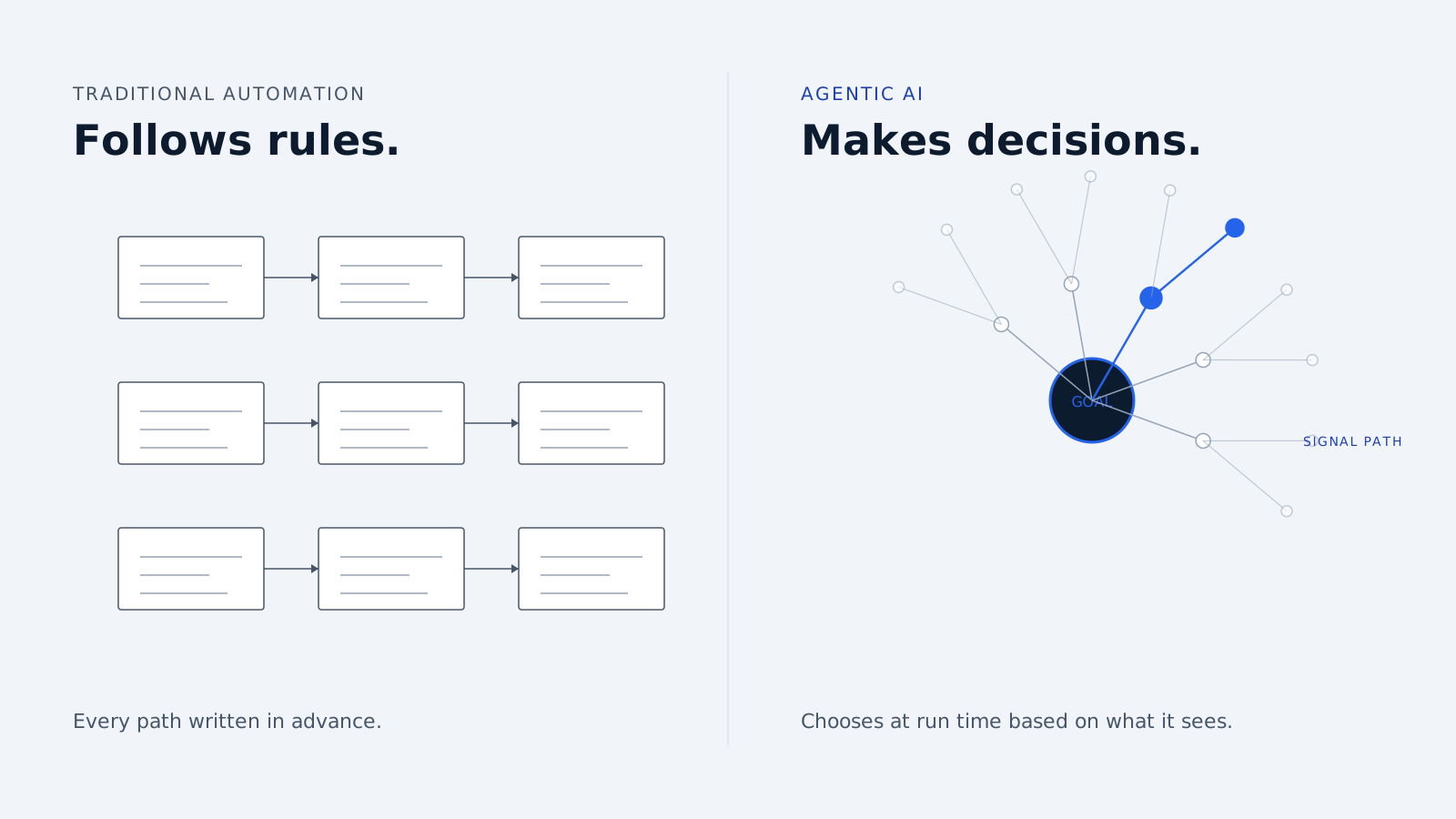
Traditional automation follows rules. Agentic AI makes decisions. That is the shortest honest answer to the question, and everything else in this article is unpacking what that actually means for a business trying to decide which one to buy in 2026.
If you have used RPA, workflow builders like Zapier, or any if-this-then-that logic, you have used traditional automation. It does exactly what you tell it to do, every time, and it breaks the moment reality does not match the script. Agentic AI works differently. You give it a goal, not a script, and it figures out the steps on its own, adjusts when things change, and calls other tools or systems as needed to get the job done.
The difference is not academic. For manufacturers and operations teams, it is the difference between automating 20 percent of a process and automating 80 percent of it.
The Core Difference in One Sentence
Traditional automation executes a workflow you wrote. Agentic AI writes the workflow itself, then executes it, then adjusts it when the situation changes.
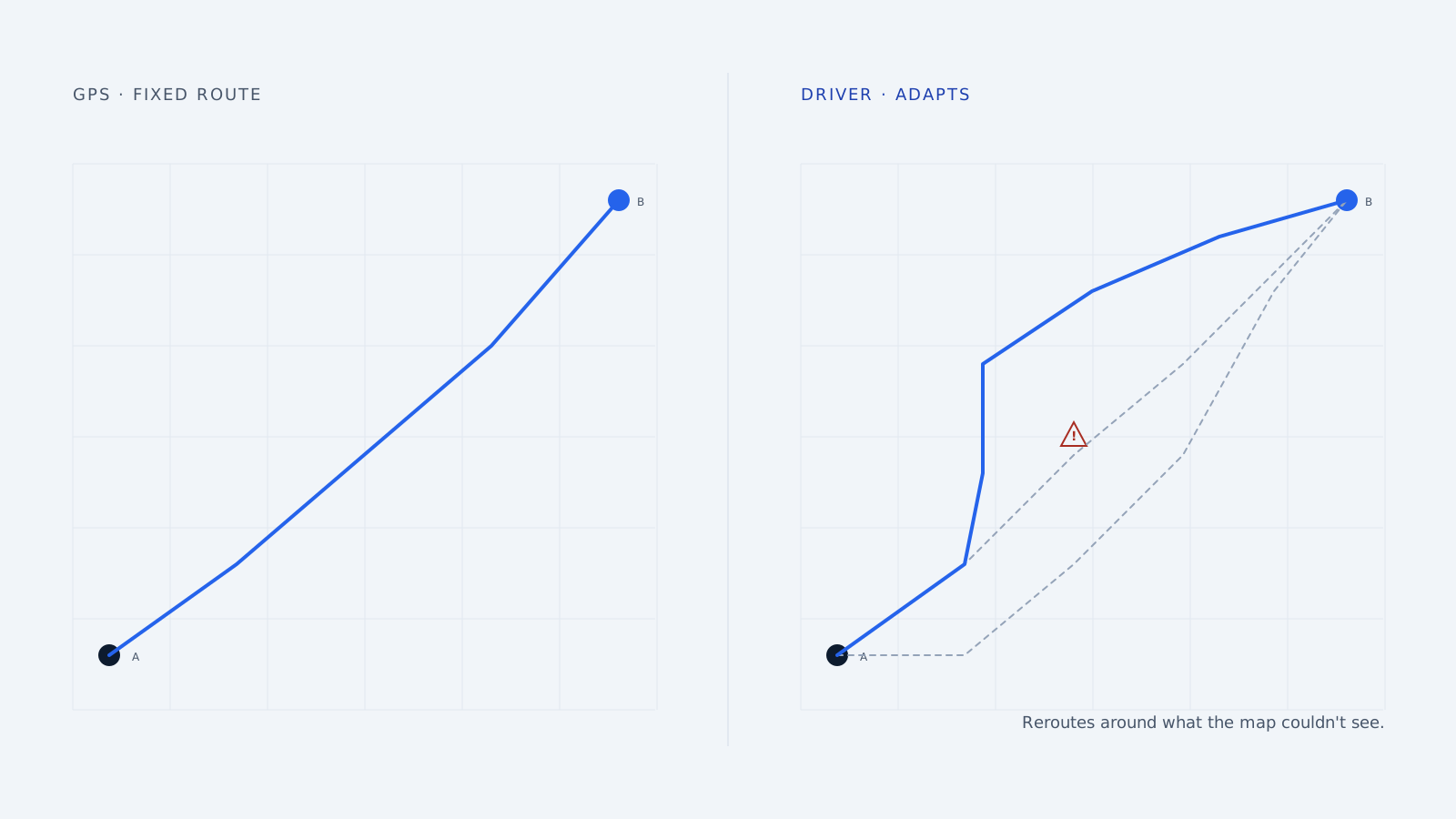
Think of it like a GPS versus a driver. A GPS gives you the same route based on fixed inputs. A driver sees the accident ahead, knows a shortcut, checks the weather, and gets you there anyway. Traditional automation is the GPS. Agentic AI is the driver.
Side by Side Comparison
| Dimension | Traditional Automation | Agentic AI |
|---|---|---|
| Decision making | Fixed rules and if-then logic | Context-aware reasoning based on the situation |
| Workflow creation | Written by engineers upfront | Generated dynamically at run time |
| Handling exceptions | Breaks or escalates to a human | Reasons through the exception and adapts |
| Learning | Static, no improvement after deployment | Improves through feedback and self-correction |
| Data it can handle | Structured only (rows, fields, forms) | Structured and unstructured (emails, PDFs, images, voice) |
| Multi-system coordination | Requires custom integrations for each path | Calls tools and APIs as needed |
| Setup time | Weeks to months per workflow | Days to weeks per agent |
| Maintenance | High, every process change means recoding | Low, agents adapt to changes on their own |
| Best for | Predictable, high-volume, repetitive tasks | Complex tasks with variation and judgment |
How Traditional Automation Actually Works
Traditional automation is built on triggers and rules. A form is submitted, a rule fires, an action happens. A file appears in a folder, a rule fires, the file gets processed. Every scenario has to be anticipated in advance and coded into the system.
This works beautifully for high-volume, low-variation work. Payroll processing. Invoice matching. Data migration. Ticket routing based on keywords. RPA bots that click through the same screens 10,000 times a day. If the input is consistent and the desired output is well defined, traditional automation is fast, cheap, and reliable.
It falls apart the moment inputs vary. An invoice with a typo in the vendor name. A support ticket that mentions three issues instead of one. A supplier email that says “we can deliver Tuesday” instead of using the structured EDI format. Traditional automation either fails, kicks the case to a human, or worse, processes it wrong without knowing it did.
How Agentic AI Actually Works
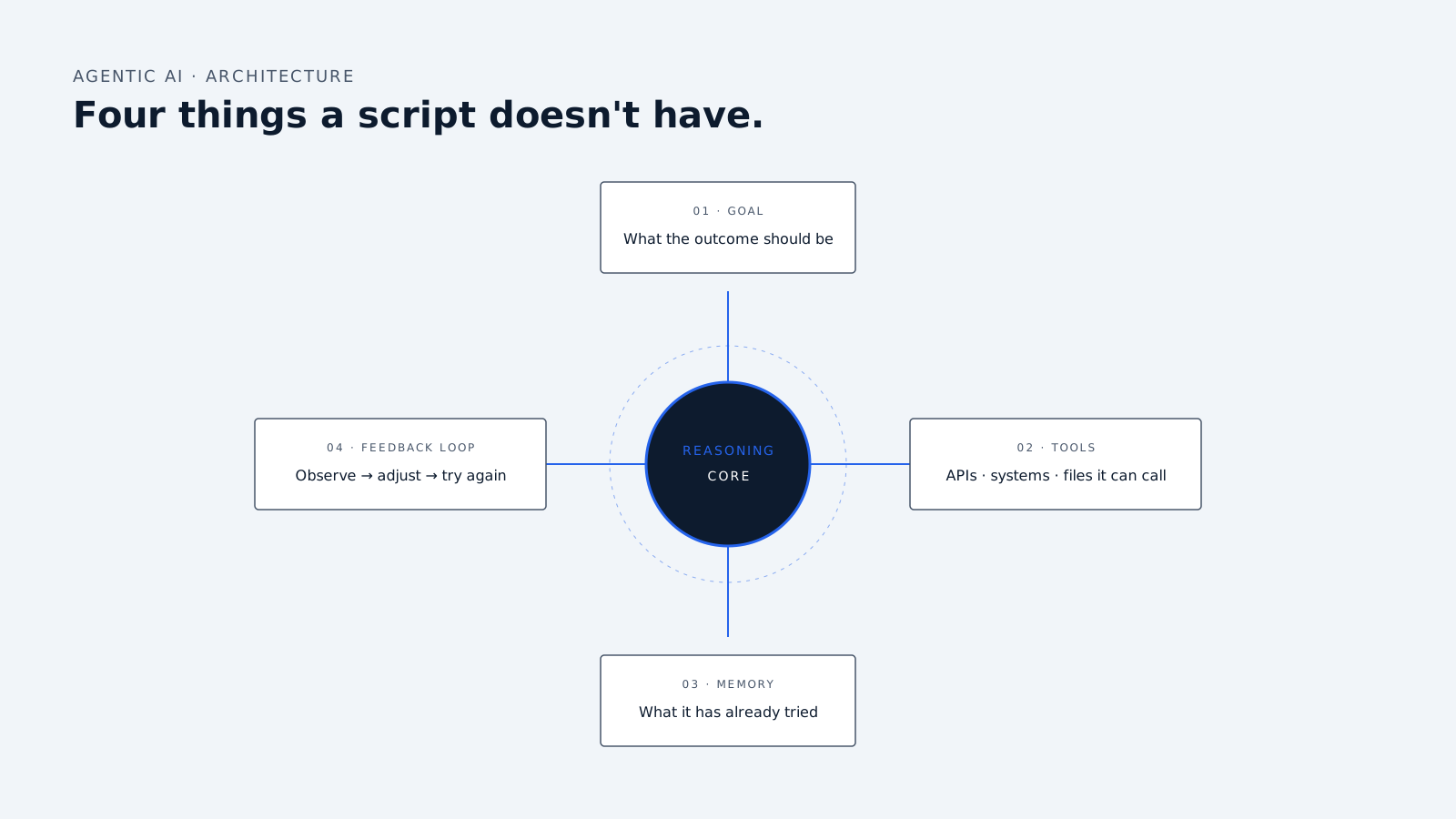
An agentic AI system has four things a traditional automation does not: a goal, a set of tools it can call, memory of what it has done, and reasoning to decide what to do next.
You tell an agent “reconcile these three inventory records and resolve any mismatch.” The agent looks at the records, notices the ERP shows 400 units but the WMS shows 385, checks the transaction log to see what happened between the last count and now, finds a shipment that was received but not yet closed in the ERP, updates the ERP, and logs the resolution. If it hits something it does not know how to resolve, it drafts a summary and escalates to a human with the full context already attached.
That whole workflow was not written in advance. The agent decided each step based on what it found at the previous one. If tomorrow the mismatch has a different cause, the agent works through it the same way, no code changes required.
Where This Matters for Manufacturers

Manufacturing is one of the clearest wins for agentic AI in 2026, because the work is full of exceptions that traditional automation cannot handle. A few examples from the field.
Predictive maintenance. Traditional systems flag when a machine hits a threshold. An agentic system flags the machine, checks parts inventory, verifies the maintenance tech’s schedule, generates the work order, notifies the shift lead, and follows up if the work order does not get picked up in a defined window.
Quality control reporting. Traditional automation logs QC data into a QMS. An agentic system assembles the evidence package, cross-references it against the customer’s spec, drafts the report, and flags anything that looks off before a human reviewer even opens it.
Shift handoff. Traditional automation cannot do shift handoffs, because handoffs require pulling from MES, CMMS, QMS, and often production notes typed by humans, then summarizing what matters for the incoming shift. An agent does this in 30 seconds and delivers it in the format the incoming shift lead prefers.
Supplier OTIF risk monitoring. Traditional automation tracks ETAs against POs. An agent tracks ETAs, compares them to production needs, identifies which late deliveries actually risk a line stoppage, and drafts a call script for the buyer to escalate with the supplier.
Downtime incident logging. Traditional automation captures the downtime event. An agent captures it, classifies the loss code, links it to related equipment history, and calculates the OEE impact automatically.
The pattern is the same in every case. Traditional automation handles the mechanical part. Agentic AI handles the part that used to require a human because it required judgment.
What Traditional Automation Still Does Better
Agentic AI is not a replacement for everything. There are places where traditional automation is still the right answer.
- High-volume, zero-tolerance-for-error tasks. Payroll, tax filings, regulatory reporting. You do not want an agent reasoning about whether to withhold Medicare. You want it to do exactly what the code says, every single time.
- Simple triggers with a single action. If a webhook fires and one thing needs to happen, do not spin up an agent. A single API call is faster and cheaper.
- Cost sensitive high-frequency work. Agentic AI runs on LLM calls, which cost real money per execution. Traditional automation runs on cents per thousand executions. If the volume is huge and the logic is simple, traditional wins on cost.
- Deterministic outputs required by law. If a regulator needs to see that the same input always produces the same output, traditional automation gives you that. Agents can vary.
The right answer for most companies is not one or the other, it is both. Use traditional automation for the mechanical high-volume work, and use agentic AI for the exception handling, judgment calls, and multi-system coordination that sits on top of it.
The Real Cost Comparison
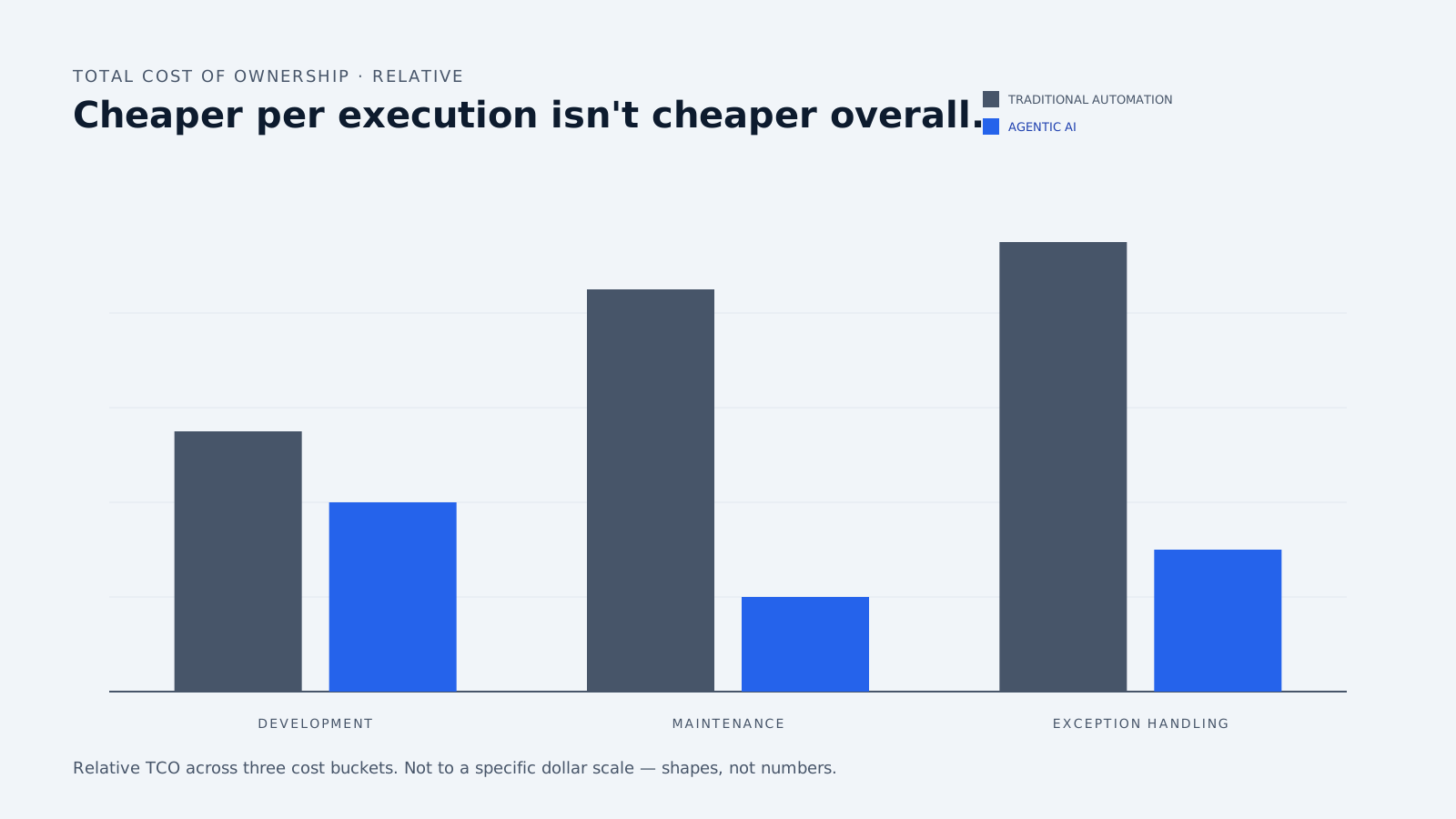
Buyers usually compare the wrong numbers. Traditional automation looks cheaper per execution, and it is, if you only count the execution cost. But the total cost of ownership is different.
Traditional automation costs to think about:
- Initial development: 2 to 8 weeks per workflow depending on complexity
- Maintenance: 20 to 40 percent of initial dev cost per year, because processes change
- Exception handling: every exception becomes a human ticket, and human time is the most expensive part of any process
- Integration cost: each new system connection is a separate project
Agentic AI costs to think about:
- Initial setup: 1 to 3 weeks per agent
- Per-execution cost: typically 5 to 50 cents in LLM calls depending on complexity
- Maintenance: minimal, agents adapt to process changes without recoding
- Exception handling: agent handles most exceptions itself, only escalates edge cases
For a workflow that runs 1,000 times a day with a 15 percent exception rate, agentic AI is usually 40 to 60 percent cheaper on total cost when you count the human time saved on exceptions. For a workflow that runs 1 million times a day with a 0.1 percent exception rate, traditional automation still wins.
Run the math on your specific workflow before you pick. Do not let a vendor tell you the answer.
What You Should Do Next
If you are running a business or an operations team and trying to decide where to invest, here is the practical path.
Start by listing your top 10 automation opportunities. For each one, ask two questions. First, does the input vary in ways that are hard to predict? Second, does resolving an exception require reading unstructured data or making a judgment call?
If the answer to both is no, use traditional automation. RPA, workflow tools, and scripts will do the job cheaper and faster.
If the answer to either is yes, you need agentic AI. This is where the ROI lives in 2026, because these are exactly the workflows that companies have failed to automate for 15 years with traditional tools.
Do not try to boil the ocean. Pick one or two high-value workflows, deploy an agent, measure the results against your baseline, and expand from there. The companies winning with agentic AI in 2026 are not the ones with the biggest deployments, they are the ones who picked the right first workflow and proved the ROI before scaling.
The Short Version
Traditional automation follows rules that a human wrote. Agentic AI reasons through goals that a human set. Traditional is faster and cheaper for predictable work. Agentic is the only option for work that requires judgment or handles unstructured data. Most companies need both, deployed in the right places for the right reasons. Pick your first agentic AI use case where exceptions currently eat the most human hours, and you will see the ROI in 90 days or less.
Sources
- How does agentic AI differ from traditional automation? — Educative
- Agentic AI vs. Traditional Automation — AutomationEdge
- Agentic AI for Manufacturing: Use Cases That Drive ROI — Moveworks
- AI-Powered Automation in 2026: Agentic AI, RPA, ROI, and Enterprise Use Cases — MultiQoS
- Agentic AI vs Traditional Automation: The 2026 Shift — Isometrik
How we write, source and correct our articles:editorial policy.
Related reading
The Business Benefits of AI Agents and Automation
What AI agents measurably do for a business, what changed in 2026, where they still fail, and how to pick a first task that pays off.
Agentic AI for small manufacturers: what it actually does
Agentic AI for small manufacturers: software that reads your CRM and inbox, then forecasts, replies, and scores leads. What it covers, and what it doesn't.

AI agents in the manufacturing industry: sales and marketing use cases beyond the hype
What AI agents actually do for manufacturing sales today vs. what's still overhyped — RFQ triage and lead scoring are real; autonomous negotiation isn't.
Ready when you are
See it read your own sales mailbox
Twenty minutes, on a real mailbox, with no slides. Gmail, Google Workspace, Outlook and Microsoft 365.